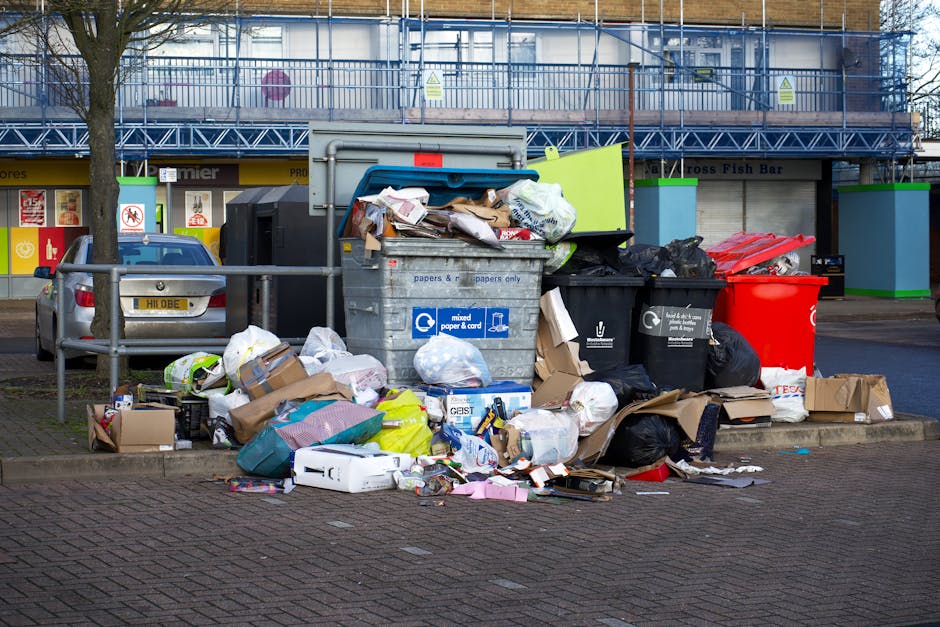
Small staircases and rubbish removal risks in Basildon flats
Small staircases can turn a simple clear-out into a surprisingly awkward job. In Basildon flats, where tight landings, narrow turns, and shared entrances are part of everyday life, rubbish removal risks can escalate fast if the move is rushed or badly planned. A box that seems easy in the hallway can suddenly catch on a banister. A bulky chair can scrape walls. A bag of mixed waste can become a slip hazard before anyone notices.
This guide explains the real-world risks, how rubbish removal in compact stairwells actually works, and what to do to keep people, property, and timing under control. Whether you are clearing a flat after a move, dealing with old furniture, or organising a larger clearance, the aim is the same: get it done safely, without drama, and without damaging the building on the way out.
Why small staircases and rubbish removal risks in Basildon flats matter
The short answer? Because most damage happens in the awkward five minutes, not in the big obvious moments. Small staircases compress everything: movement, visibility, patience, and margin for error. When a flat has a narrow staircase, a sharp corner, or a low ceiling over the turn, even a routine rubbish run can become a trip hazard or a wall-scuffing exercise.
In Basildon flats, the pressure is usually practical rather than dramatic. People want to clear space quickly, keep neighbours happy, and avoid leaving bags in communal areas. But if you are carrying awkward waste down stairs, there are a few risks that tend to show up again and again:
- Trips and slips on cluttered steps, loose packaging, or dropped debris.
- Back and shoulder strain from lifting in cramped positions.
- Damage to walls, railings, doors, and flooring where the staircase is too tight for the item.
- Delays and blockages when items need to be repacked or partially dismantled.
- Noise and disturbance in shared buildings, especially early morning or evening.
- Fire escape concerns if items are left on landings or in common access routes.
To be fair, a lot of people only realise this once they are standing halfway down the stairs with a bulky wardrobe or a soggy bin bag that is trying to split open. Not ideal. And because flats often involve shared hallways and close neighbours, one small mistake can affect several people, not just the person doing the clearance.
If the job is larger than a few bags, it may be worth looking at a more structured service such as flat clearance, or broader support through home clearance or waste removal depending on what needs moving. For bigger mixed loads, especially where furniture is involved, furniture disposal can reduce the number of awkward hand-carries down the stairs.
How small staircases and rubbish removal risks in Basildon flats works
In a flat with a small staircase, rubbish removal is really about sequencing. You are not just moving items from A to B; you are solving a space problem while keeping the route open, the weight manageable, and the building protected. That is the bit people underestimate.
Here is what usually happens in a well-run clearance:
- Access is checked first. Stair width, turns, ceiling height, door swing, and landing space are reviewed before anything heavy is carried.
- Items are grouped. Light bags, awkward furniture, broken pieces, and recyclable materials are sorted rather than moved in one mixed pile.
- The route is protected. Floors, corners, and bannisters may be covered or kept clear to reduce impact.
- Loads are broken down. If something is too large, it may be dismantled or carried in stages. That part can feel slow, but it prevents a lot of grief later.
- Removal is timed carefully. The work is done to minimise congestion in shared areas and avoid peak times where possible.
- Final sweep and check. Loose debris, fixings, and packaging are removed so the staircase is left safe and tidy.
Compact staircases often create two specific problems. First, items may not rotate through the turn without lifting above shoulder height, which increases the risk of strain. Second, the person in front may not be able to see the next step clearly. That is where coordination matters. One carrier, one spotter, no rushing. Simple on paper. More awkward in real life, especially if it is raining outside and everyone just wants to get on with it.
For flats where the main issue is not just size but mixed waste and old household items, combining planning with house clearance or furniture clearance can make the process easier to manage. And if you are dealing with trade leftovers, it may be more appropriate to look at builders waste clearance instead.
Key benefits and practical advantages
Managing stair access properly does more than prevent accidents. It improves the whole experience, which matters when you live in close quarters. In a flat, one careless trip can mean scratched paint, noise complaints, or waste left in the wrong place. A bit of planning avoids that.
- Safer handling: Fewer chances of twisting, dropping, or overreaching on stairs.
- Less property damage: Better control around walls, handrails, bannisters, and shared flooring.
- Faster clearance overall: A route that is clear and measured usually saves time, even if the prep takes a little longer.
- Better neighbour relations: Less noise, less clutter in common areas, fewer awkward apologies in the stairwell.
- Cleaner sorting: Rubbish, furniture, and reusable items can be separated more efficiently.
- Lower stress: You are not guessing whether the sofa will fit halfway down and then getting stuck. Which, frankly, is the sort of thing nobody wants to be doing on a Tuesday afternoon.
There is also a financial angle, although it is rarely talked about in a neat way. Good planning can reduce the need for return visits, emergency labour, or repairs to chipped plaster and damaged trim. If you are comparing options, it is worth looking at pricing and quotes early rather than treating it as an afterthought.
Expert summary: In small Basildon flat staircases, the real win is not moving things faster; it is moving them more predictably. Predictable movement means fewer knocks, fewer slips, and a much calmer job from start to finish.
Who this is for and when it makes sense
This topic matters to more people than you might think. It is not just for landlords or clearance teams. If you live in a top-floor flat, manage a rental property, or are sorting a relative's belongings after a move, the staircase itself can become the main obstacle.
It usually makes sense to plan more carefully when:
- the staircase is narrow or steep;
- there is a tight bend at the landing;
- you need to move bulky furniture as well as rubbish bags;
- the building has shared entrances or limited waiting space;
- items are heavy, broken, or awkwardly shaped;
- you need the flat cleared on a schedule;
- you want to avoid disturbing other residents.
This also applies if the job mixes domestic items with office equipment or stored stock. In those cases, a service like office clearance or business waste removal may be a better fit than a general one-off trip. Likewise, if the clear-out includes a garage or loft, the movement path may be different, but the stair safety logic stays the same. A bad stairwell is a bad stairwell.
If you are not sure whether the load is mostly waste, reusable furniture, or a mixed clear-out, that decision matters. It affects the equipment, the number of people needed, and how much time the staircase will be in use. Small details, big consequences.
Step-by-step guidance
Here is a practical way to approach a small-staircase clearance without overcomplicating it.
1) Walk the route before lifting anything
Start at the item, not the door. Measure the tightest part of the staircase, check the landing turn, and notice any low light, loose carpet, or slippery patches. In a lot of flats, the problem is obvious once you actually stand on the stairs and look up. The gap is smaller than you thought. That happens all the time.
2) Separate the load into sensible groups
Put heavy items, sharp items, dusty items, and bagged waste in separate groups. Mixed loads slow everything down and create unnecessary handling. If something can be flattened, bagged, or dismantled, do that early.
3) Protect the staircase first
Use covers or padding where appropriate, and keep the route free from loose boxes, cords, and packaging. It sounds obvious, but stair clutter has a way of multiplying. One box becomes three. Then a sweep of dust. Then a shoe. Then a bag tear. And suddenly the stairs look like they have had a rough day.
4) Lift in pairs for larger items
Two people can usually control a bulky item better than one, especially on a turn. One leads and one guides. If visibility is poor, add a spotter rather than trying to be brave and lean around the corner with your knees locked.
5) Keep landings clear
Landings are not storage space. If you need to pause, make sure the pause does not block exits or create trip hazards. Keep the work moving in short, controlled runs.
6) Finish with a safety check
Look for scuffs, dropped screws, loose plastic ties, and anything that might trip the next person using the stairs. If the property is being handed back, this final check is worth its weight in gold. Or at least in coffee.
If the job feels larger than expected, it is usually better to pause and reassess than to force it through. A flat clearance is far easier to control when the process is planned than when it becomes a scramble halfway down the stairwell.
Expert tips for better results
Small staircases reward discipline. Not perfection, just discipline. The best results usually come from small practical habits rather than fancy equipment.
- Take the heaviest item out first only if the route is clear. Otherwise, do lighter items first to create more space and reduce clutter.
- Use gloves with grip. Good grip matters more than people think, especially on textured stair treads or damp days.
- Don't overload bags. Bags that are too heavy split, and split bags on stairs are miserable.
- Keep one hand free where possible. It helps with balance and opens doors without awkward juggling.
- Check for hidden sharp edges. Broken frames, old metal brackets, and stripped screws are common in flat clearances.
- Plan around neighbours. A quick heads-up can be the difference between a smooth job and repeated door-opening at the worst possible moment.
One thing people often miss is sound. Stairs carry noise. The thump of a dropped plank, the scrape of a fridge base, or the rattling of a bin bag at 7am travels further than you expect. A quieter approach is usually a better approach. Truth be told, it just feels more professional too.
If you are arranging a sensitive clearance, it may also help to review the company's health and safety policy and insurance and safety information so you know what standards are being followed. That kind of reassurance matters when access is tight.
Common mistakes to avoid
Most stair-related problems are preventable. The trouble is, people tend to notice the risk only once they are already carrying something awkward.
- Forcing oversized items down the stairs. If it barely fits, it probably does not fit safely.
- Leaving bags on landings. That can block access and create a safety issue for other residents.
- Using too few people. A solo carry may look efficient until someone loses balance on the turn.
- Ignoring wet shoes or damp floors. Wet stair treads in a communal building are no joke.
- Skipping dismantling. Sometimes five minutes with a screwdriver prevents twenty minutes of wrestling.
- Assuming every item should go the same way. Reuse, recycling, and disposal are not identical tasks.
- Not checking the exit route. If the front door is awkward or the hall is narrow, the real bottleneck may not be the stairs at all.
There is also a paperwork mistake people make. They assume a clearance is just about physical removal, but waste should still be handled properly. If your job includes mixed rubbish, broken materials, or bulky household waste, it is worth understanding how the operator deals with sorting and disposal, not just lifting.
Tools, resources and recommendations
You do not need a van full of specialist gear to make a flat clearance safer. A small set of practical items goes a long way.
| Tool or resource | Why it helps in small staircases | Best use |
|---|---|---|
| Gloves with grip | Helps prevent slipping and improves control | Carrying bags, boxes, and awkward lightweight items |
| Dust sheets or corner protection | Reduces scuffs on walls and bannisters | Before moving furniture or sharp-edged waste |
| Strong bin bags or heavy-duty sacks | Less likely to tear on stairs | Loose waste, textiles, and mixed household rubbish |
| Dismantling tools | Allows bulky items to be reduced in size | Wardrobes, bed frames, shelving, flat-pack furniture |
| Headtorch or portable light | Improves visibility on dim stairwells | Older buildings or poorly lit communal areas |
| Waste separation containers | Makes sorting quicker and less messy | Mixed waste, recyclable items, reusable goods |
For practical planning, a quick pre-clearance walk-through is often the best resource of all. Notice the turning points. Note the pinch points. Check whether the lift, if there is one, is actually suitable. And if the staircase is too awkward for the items you need moved, a dedicated flat-focused service may save both time and stress.
You can also read about the business's general approach through about us and review recycling and sustainability if you want to understand how materials are handled beyond the stairwell. That can be reassuring, especially when the clear-out includes a mixture of reusable and non-reusable items.
Law, compliance, standards and best practice
When rubbish is removed from flats, the main compliance concerns are usually safe handling, proper waste transfer, building access rules, and avoiding obstruction in shared areas. You do not need to turn into a legal expert to make sensible decisions, but you do need to respect the basics.
In the UK, the practical expectations are broadly straightforward:
- Do not block shared escape routes with rubbish or furniture.
- Handle waste responsibly and separate items where needed.
- Avoid creating hazards for residents, visitors, and staff in communal spaces.
- Use appropriate lifting and carrying methods to reduce injury risk.
- Follow building rules if the block has a management company or resident instructions.
Best practice also includes clear communication. If access is limited, say so. If there are stairs, mention the turns. If a bulky item is likely to need dismantling, raise it before the day of collection. In other words, do not leave everyone guessing and hope for the best. That rarely ends well.
From a service standpoint, it is sensible to choose a provider that explains how they work, how payments are handled, and what safety measures are in place. Useful pages to review include payment and security, terms and conditions, and the company's complaints procedure. Those pages may not feel exciting, but they do help build trust when you are letting someone work inside your building.
Options, methods and comparison table
There is no single best way to handle rubbish removal in a small-staircase flat. The right choice depends on the load, the building, and how much time you have. Here is a simple comparison to make the decision easier.
| Method | Best for | Pros | Limitations |
|---|---|---|---|
| DIY bag-by-bag removal | Small amounts of light rubbish | Low cost, flexible timing | Slow, tiring, more trips on the stairs |
| Two-person manual carry | Moderate loads and some furniture | Better control, safer for awkward items | Needs coordination and enough space |
| Pre-dismantled removal | Bulky furniture and tight turns | Easier stair navigation, less property damage | Requires tools and extra prep time |
| Full flat clearance service | End-of-tenancy, bereavement, or larger clear-outs | Efficient, organised, less stress on the resident | Usually more expensive than DIY |
| Mixed waste collection | Combined household and trade-style waste | Good for varied items, less sorting burden | Needs clear categorisation to avoid delays |
If you are clearing only a few items, DIY may be enough. But once the staircase becomes a safety concern, or the furniture looks like it needs a small engineering degree to move, a more structured service is usually the sensible option. Nobody gets points for stubbornness here.
Case study or real-world example
Picture a second-floor flat in Basildon with a narrow internal staircase and a sharp ninety-degree turn halfway down. The resident needs to clear out an old sofa, two broken office chairs, four bags of general rubbish, and a disassembled bed frame. At first glance, it looks manageable. It always does.
Once the work starts, the sofa is the problem. It cannot turn cleanly without lifting, and the landing is too small for a comfortable pivot. The bed frame is easier once dismantled, but the screws and brackets need to be bagged separately so they do not end up loose on the stairs. The chairs are light, but their legs catch on the handrail if carried the wrong way. Nothing dramatic. Just lots of small irritations that stack up.
The solution is simple enough: clear the route, take the sofa out in stages, keep one person spotting from below, and move the smaller items only after the landing is safe. The job takes longer than expected, but the staircase is left untouched and the flat is emptied without a single wall chip. That is the sort of result people remember.
For a similar mix of items, a combined service such as flat clearance with targeted furniture clearance support is often the cleanest route. And if the clear-out is part of a larger property job, house clearance may be more appropriate overall.
Practical checklist
Use this before any rubbish removal in a flat with a small staircase.
- Measure the narrowest point, including turns and landings.
- Check whether large items can be dismantled first.
- Separate heavy, sharp, dusty, and recyclable waste.
- Clear hallways, doors, and the bottom and top of the stairs.
- Protect walls, corners, and floors where needed.
- Assign at least one person to guide movement on tight turns.
- Keep bags light enough to handle safely.
- Avoid stacking items on communal landings.
- Plan for bins, vehicle access, and loading space.
- Confirm any building rules or access restrictions in advance.
- Review the provider's approach to safety, insurance, and waste handling.
- Do a final sweep for debris, fixings, and small hazards.
If you can tick most of that off, you are in good shape. If not, it may be worth slowing down and getting the route right before the first item moves. That tiny pause can save a lot of bother later.
Get a free quote today and see how much you can save.
Conclusion
Small staircases make rubbish removal in Basildon flats more complex, but not unmanageable. The real risk is assuming the job is straightforward when the access says otherwise. Once you take the staircase seriously, the rest becomes much easier to plan: safer lifting, cleaner movement, fewer scuffs, and less stress for everyone involved.
Whether you are dealing with a few heavy bags or a full flat clear-out, the best results usually come from preparation, patience, and sensible handling. That is true in old blocks, new developments, and those awkward middle-ground staircases that seem to get narrower when you carry something bulky. Funny how that works.
Do the route check, respect the space, and choose the right removal method for the load. It is a small bit of planning that pays off in a big way, and honestly, that is often the difference between a messy job and a proper one.
Frequently Asked Questions
What are the main risks of rubbish removal in flats with small staircases?
The main risks are trips, slips, back strain, wall damage, dropped items, and blocked communal access. Tight turns and low visibility make these more likely.
How do I know if my staircase is too narrow for furniture removal?
If the item cannot turn comfortably at the landing, or if you have to force it past the handrail or wall, the staircase is probably too narrow for safe removal without dismantling.
Should I dismantle furniture before carrying it down the stairs?
Yes, where possible. Breaking larger items into smaller parts usually makes the job safer, quicker, and less likely to damage the building.
Is it safe to leave rubbish on a flat's landing temporarily?
Only if it does not block access or create a hazard, and even then it should be brief. In shared buildings, landings should generally be kept clear.
What type of service is best for a small flat in Basildon?
It depends on the load. Light waste may suit general rubbish removal, while mixed household items are often better handled through flat clearance or home clearance.
How can I reduce the chance of damaging walls and bannisters?
Protect corners, move slowly on turns, use two people for large items, and dismantle bulky furniture before lifting it. A spotter helps a lot too.
What should I do if the stairwell is dark or badly lit?
Use additional lighting where safe and practical, and do not rush. Poor visibility is a common reason for slips and scrapes in stairwells.
Can one person safely remove rubbish down a small staircase?
Small, light loads may be manageable for one person, but bulky or awkward items are much safer with two people or more.
How do recycling and sustainability fit into flat clearance?
They matter because not everything should be treated as general waste. Sorting reusable items and recyclable materials helps reduce unnecessary disposal and can make the job cleaner overall.
What should I ask before booking a clearance service?
Ask how they handle access issues, whether they are insured, how they manage waste, what happens with furniture, and whether they can work around your building's layout.
Does a larger clearance need different planning than a small rubbish run?
Yes. A larger clearance usually needs more sorting, more protection for the stair route, and more time. The staircase becomes even more important because it gets used repeatedly.
Where can I find more details about how the company handles safety and payments?
You can review the relevant information on the company's health and safety policy, insurance and safety, and payment and security pages.