House Clearance in Basildon

House Clearance Basildon provides a practical house clearance service for homes that need rooms, contents or whole properties cleared in an orderly way. The main service is about removing unwanted items, separating what can be reused or recycled, and leaving the property ready for its next stage. That might suit a sale, a tenancy handover, a refurbishment, or simply the need to reduce clutter in a controlled manner.
We handle clearances with an emphasis on clear scope and sensible planning. For many customers, the useful part of the service is not only the removal itself, but the way it is organised: furniture, general household contents, stored belongings and mixed items can all be handled as part of one clear process. If you need to compare options, you can first review pricing and quote information and then decide how much of the property should be cleared.
Our work is designed around what needs to go, what can be left behind, and any items that require particular care. That makes the service suitable for full house clearances, partial clearances, and more focused jobs where only certain rooms need attention. Clarity about the job scope helps the outcome, especially when a property includes a loft, garage, furniture, and loose household items that need sorting rather than simply moving. Start with the main areas, and we can shape the clearance around them.
Clearance work for different parts of the home
Different homes need different levels of attention, so a house clearance often works best when the property is broken down into manageable areas. A single project may include bedrooms, living spaces, storage cupboards, hallways or outbuildings, with each area needing its own approach. Rather than treating every item as identical, the service can be organised around what is being removed and how it should be handled. That keeps the work practical and easier to plan.
For many households, one of the benefits of a structured clearance is that it avoids unnecessary disruption. Items can be grouped by type, access can be planned in advance, and the clearance can be matched to the property layout. If the job includes larger items, our furniture clearance service is relevant because bulky pieces often need more room to move and more careful handling than mixed loose contents. The same applies where there are multiple rooms with different priorities.
Useful types of house clearance
The service can cover a wide range of residential needs, including full-property clearances, partial removals and room-by-room work. Common examples include a loft filled with stored items, a garage with mixed household belongings, or a home where only selected furniture and general contents need to be taken away. In each case, the focus is on removing what is no longer wanted while keeping the remaining property in order.
Handling furniture, contents and awkward access

House clearances often involve more than lightweight items. Sofas, wardrobes, beds, cabinets and other domestic furniture can be part of the job, along with boxed belongings, small household objects and mixed refuse. Where larger pieces are involved, planning matters because stairs, narrow halls and tight doorways can affect how items are moved. A measured approach reduces the chance of damage and helps the work progress efficiently.
Some properties present access questions that are easy to overlook until the day of the clearance. A loft hatch, an attached garage, a cellar, a long drive, or limited parking can all affect how the work is carried out. That is why it helps to know whether the clearance is for a flat, a semi-detached house, a terraced property or a home with outbuildings. Where access is straightforward, the work can focus on removal; where it is more restricted, organisation becomes just as important as lifting. If the property is a flat, the flat clearance page may be a useful next step.
What usually shapes the job is a combination of item type, volume and access. A few heavy pieces may take more care than a room full of light contents, while a heavily filled garage may need sorting before lifting begins. If the property includes a loft or stored belongings, those areas can be folded into the same clearance rather than treated separately. That approach keeps the service flexible without turning it into a one-size-fits-all process.
What a house clearance can include
House clearance is often chosen because it can cover several linked tasks in one visit rather than forcing the customer to split them apart. It may include the removal of unwanted furniture, everyday household items, storage contents and non-hazardous waste from the property. Depending on the property and the amount to be removed, the work may also involve separating items that can be reused from those that are destined for disposal.
When customers want a more specific kind of domestic removal, the service can be narrowed to a particular area or item type. For example, a home clearance can be a better fit when the whole property needs attention, while a more focused clearance may only involve one room or one group of items. The important part is making the scope plain from the outset so the work matches the property and the amount to be moved.
A simple way to think about the service is this: if the item is part of the house and no longer needed, it can often be included. That may mean pieces of furniture, boxed belongings, loose household contents, ornaments, or mixed items gathered during a move or decluttering project. For customers with a larger accumulation of stored items, the work can also connect naturally with loft clearance, which is useful where the most difficult part of the job is reaching and sorting the storage space itself.
Preparing the property for clearance
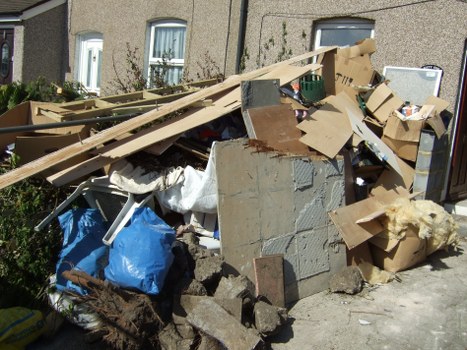
Preparation does not need to be complicated, but a little structure can make the clearance smoother. It helps to identify any items that are staying, note rooms that are out of scope, and think through anything that needs special handling before the work begins. If there are belongings that should remain in the property, separating those in advance can save time and reduce confusion. Clear instructions tend to make the service more efficient.
Where the property contains a lot of mixed items, photographs or a basic room list can be useful when requesting a quotation. That is especially helpful if there are several rooms, a garage, a loft or external storage spaces involved. A clear description of access and volume also assists with planning. If the job is mainly about one external area, our garage clearance service may be more appropriate than a full-house arrangement, because it keeps the scope narrow and practical.
Useful preparation usually comes down to a few sensible steps:
- Separate anything that is not to be removed.
- Identify rooms, storage spaces or outbuildings included in the job.
- Note heavy, awkward or fragile items.
- Make access details clear, especially for stairs or tight entrances.
- Gather photographs or a brief item list if you want the quotation to reflect the real work involved.
Furniture and bulky item removal
Many house clearances are driven by bulky items rather than sheer quantity. A few large pieces can take more effort than a room of smaller contents, particularly where they need to be manoeuvred through tight spaces. Sofas, beds, wardrobes, tables and cabinets often require a planned route and careful handling. The removal service needs to respect both the furniture itself and the condition of the property during the move.
Where the main concern is oversized household pieces, it can help to focus on the relevant service directly. Our furniture disposal page suits customers who need unwanted items taken away rather than rearranged or stored. Some jobs include a mix of useful and unusable furniture, so the exact approach depends on what needs to leave the property and what should remain in place. That distinction is worth making before the work begins.
For households clearing several rooms at once, bulky items are often only part of the overall picture. A proper house clearance can combine furniture with smaller contents, making it easier to clear a room in one sequence instead of returning repeatedly for separate items. If you are comparing options, think about whether the job is primarily furniture-led, contents-led, or a full home clearance. That decision shapes how the work is priced and organised.
Pricing factors and quotation details

The cost of a house clearance is usually shaped by a few straightforward factors: the amount to be removed, the type of items involved, access to the property and the time needed to complete the work safely. A small clearance with easy access is very different from a fuller job involving several rooms, stairs, loft storage or heavy furniture. Keeping those details accurate helps the quotation reflect the real scope.
It is also useful to be specific about what the clearance includes and what it does not. If one room must remain untouched, or if certain items are staying in the property, that should be made clear. When a customer has a short list of priority rooms, a targeted service such as office clearance is not relevant here, but it shows why matching the right page to the right type of job matters. Domestic and commercial clearances are different in both scope and use.
For a sensible quotation, focus on practical facts rather than trying to describe the job in vague terms. The size of the property, the number of rooms involved, the presence of bulky items and any difficult access all help build an accurate picture. If you are ready to move forward, ask for a quotation now. When the details are clear, it becomes much easier to plan the clearance properly and avoid unnecessary back-and-forth.
Reusing, recycling and responsible disposal
A good house clearance is not only about taking items away; it is also about handling them sensibly once they leave the property. Mixed household contents often contain a combination of reusable items, recyclable materials and general waste. Where possible, the service can separate these categories so that suitable items are dealt with in the right way rather than all being treated as the same material.
That is why clearances often work best when the contents are sorted with some care. Furniture may be suitable for one route, while broken household items or mixed waste need a different one. For customers who want the wider domestic clearance to connect with a more general removal service, the waste removal page covers the broader side of taking away unwanted materials. The exact balance between reuse, recycling and disposal depends on the items involved.
The most practical approach is to think in terms of what should happen to each group of items. Some things may simply leave the property as part of the clearance, while others may need separating before they are handled. Responsibility and order matter because they keep the process clear for the customer and help the work remain suitable for the contents being removed. That applies whether the clearance is a single room or a whole house.
Basildon and the surrounding town centre
Basildon is a post-war town in Essex, planned and expanded in the mid-twentieth century as part of a wider programme of new towns in England. Its centre developed with shopping, civic and transport functions clustered around the main urban core, while residential districts spread outward in planned neighbourhoods. The town’s layout reflects that modern origin, with wide roads, estates and open spaces sitting alongside retail and public buildings. In the centre, Eastgate Shopping Centre and Basildon Town Centre form a focus for daily activity, while Basildon railway station links the town to London and the wider Essex rail network. The area is also known for Wat Tyler Country Park on the outskirts, which opens access to marshland and riverside landscape. Laindon and Pitsea, now part of the wider Basildon urban area, contribute their own long histories and local identities. The town’s built environment therefore combines post-war planning with older settlement patterns and newer development, giving it a mixed character rather than a single uniform appearance.
House clearance options for different property sizes

Not every clearance needs the same scale of response. A smaller property may need only one room or one group of items cleared, while a larger house can involve several floors and a mix of storage spaces. The service can be scaled to suit the amount of work involved, which is useful if the job is only partly a clearance and partly a declutter. That flexibility helps keep the process relevant to the property itself.
Some customers need a partial clearance because they are keeping furniture but removing old contents, while others need almost everything taken away. If your priority is a larger domestic job, the house clearance page itself is the most direct place to start, because it covers the service at its broadest. Where the job begins to overlap with storage areas, a garden clearance or other focused removal service may also be worth comparing if there are separate outdoor items involved.
Two brief checks help to make the right choice: first, decide which rooms or spaces are included; second, note whether the clearance is mainly furniture, mixed contents or storage. Once that is clear, the service can be matched to the actual job rather than a broad assumption. If you are ready to talk through the scope, request a quotation and we can take it from there.